

West Coast Floral
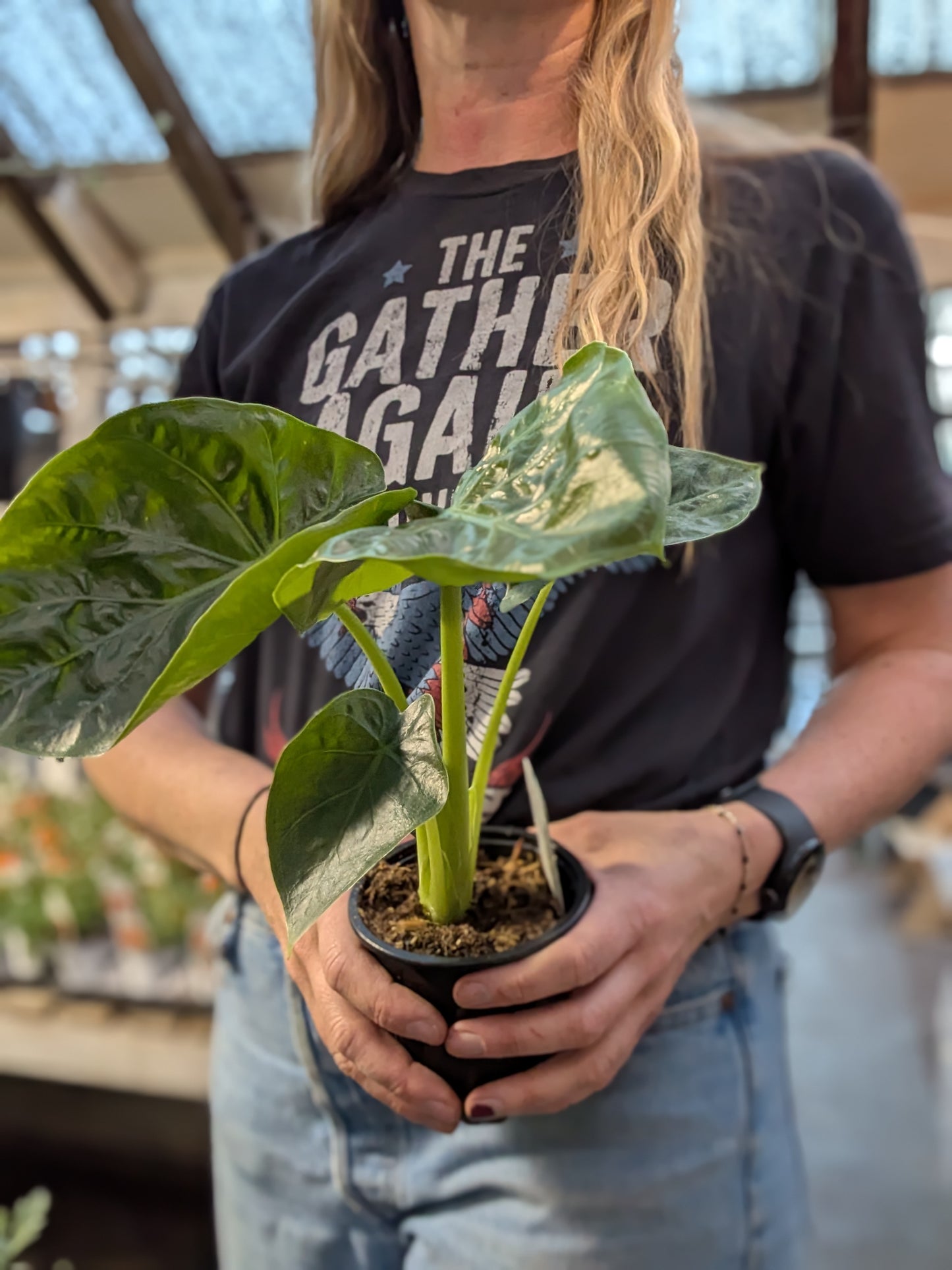
Alocasia Macchrohiza (4")
Alocasia Macchrohiza (4")
Couldn't load pickup availability
Alocasia Macrorrhiza
Also known as Giant Taro, Elephant Ear.
Alocasia macrorrhiza
Care Difficulty
Moderate. A fast-growing tropical plant that thrives with warmth, bright light, and consistent moisture.
Light Requirements
Bright, indirect light to partial sun. A few hours of gentle morning sun is beneficial, but protect the leaves from intense afternoon sun indoors.
Water Requirements
Keep the soil evenly moist, allowing the top 1 to 2 inches to dry slightly between waterings. Water thoroughly and ensure excess water drains freely. Avoid both soggy soil and allowing the soil to dry out completely.
Humidity
Prefers high humidity (60 to 80%). Higher humidity encourages lush foliage and helps prevent brown leaf edges.
Pet Safety
Not pet safe. Contains calcium oxalate crystals and is toxic if chewed by cats, dogs, or people. Keep out of reach of children and pets.
Growth Speed
Fast. Under warm conditions, it produces large new leaves throughout the growing season.
Expected Mature Size
- Indoors: 6 to 10 feet tall
- Width: 4 to 6 feet
- Leaf Size: Up to 3 to 5 feet long on mature plants
Pot Size
Repot every 2 to 3 years or when roots become crowded. Use a large container with drainage holes and a chunky, well-draining aroid potting mix.
Where it Grows Best
Indoors in bright rooms with temperatures between 65 and 85°F (18 to 29°C). It also makes an impressive patio plant during the summer. In Zone 3, bring it indoors before nighttime temperatures fall below 60°F (16°C).
Perfect for…
- Tropical plant collections
- Large living rooms
- Sunrooms
- Statement plants
- Indoor jungle displays
- Anyone wanting dramatic tropical foliage
Common Mistakes
- Overwatering, which can lead to root rot.
- Allowing the soil to dry out completely.
- Growing in low humidity, causing brown leaf edges.
- Placing the plant in direct afternoon sun.
- Using heavy soil that retains too much moisture.
- Exposing the plant to cold temperatures or drafts.
Frequently Asked Questions
How large does Alocasia macrorrhiza get?
It is one of the largest Alocasia species. Indoors it commonly reaches 6 to 10 feet tall, while outdoor plants in tropical climates can grow well over 10 feet with enormous leaves.
Can it go dormant?
Yes. Like many Alocasias, growth slows during the winter months and the plant may lose one or more older leaves. Resume regular watering and fertilizing when new growth begins in spring.
How often should I fertilize it?
Feed every 2 to 4 weeks during spring and summer with a balanced water-soluble houseplant fertilizer at half strength. Stop fertilizing during winter.
Why are the edges of my leaves turning brown?
Brown edges are usually caused by low humidity, inconsistent watering, or mineral buildup from tap water. Higher humidity and consistent soil moisture will help keep the foliage healthy.
Can I propagate Alocasia macrorrhiza?
Yes. It is most commonly propagated by dividing offsets or corms when repotting.
How do I keep the leaves looking their best?
Wipe the large leaves regularly with a soft, damp cloth to remove dust. This improves light absorption and keeps the foliage glossy and healthy.
Shipping Guarantee
Every Alocasia macrorrhiza is carefully inspected, watered, and securely packaged before shipping. Extra care is taken to protect its impressive tropical foliage during transit so your plant arrives healthy and ready to grow.
Healthy Arrival Guarantee
We stand behind the quality of our plants. If your Alocasia macrorrhiza arrives with significant shipping damage or in poor condition, contact us within 24 hours of delivery with clear photos of the plant and its packaging. We will gladly work with you to provide an appropriate replacement or store credit in accordance with our Healthy Arrival Guarantee policy.
Share