
Riverdene Garden Centre
Blueberry Muffin Hosta (PW)
Blueberry Muffin Hosta (PW)
Couldn't load pickup availability
Overview
-
Botanical Name: Hosta ‘Blueberry Muffin’
-
Common Name: Blueberry Muffin Hosta
-
Hardiness Zones: Rated to Zone 3‑9 by some sources (so suitable for cold climates)
-
Mature Size: Typically about ~14 inches tall (≈35 cm) and ~36 inches wide (≈90 cm) under good conditions.
-
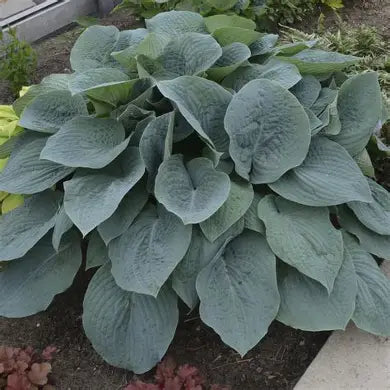
Key Features: Thick bluish‑green leaves (large, rounded, somewhat puckered texture), petioles speckled with mauve; in late season the foliage may transition toward green. Lavender flower scapes rise above the foliage in early summer.
Light & Site Requirements
-
Prefers part shade (e.g., 4–6 hours of direct sun) or full shade. Blue foliage often holds best in dappled shade or morning sun + afternoon shade.
-
Should be planted in soil that is moist but well‑drained, rich in organic matter.
-
Avoid hot afternoon sun, especially in warm climates, as it can scorch the leaves and reduce the blue tone.
Watering & Soil
-
Plant in an organic‑rich, slightly acidic to neutral soil (pH ~5.5‑7.5) with good drainage.
-
Water regularly until established; once established maintain consistent moisture but avoid standing water or soggy conditions, since hostas dislike “wet feet”.
-
Apply mulch around the plant in early spring to conserve moisture and moderate soil temperature; keep mulch away from the crown to reduce risk of rot.
Maintenance & Division
-
Remove faded flower scapes after bloom (unless you want seed or interest) to keep the plant tidy.
-
In early spring, tidy up the plant by removing old leaves and applying a light side‑dressing of compost or balanced fertilizer (if soils are poor). Many sources say avoid heavy fertilizing late in the season.
-
Every few years you may divide the plant (typically in early spring when new shoots emerge) to maintain vigor or propagate more plants.
Cold Climate (Zone 3) Considerations
-
Being rated to Zone 3, Blueberry Muffin Hosta should handle prairie or northern gardens with the right site selection.
-
Choose a site with winter protection (e.g., no extreme drying wind, no low spot with standing water) so the crown does not heave or take freeze‑thaw damage.
-
In very exposed sites, a light mulch in late fall may help protect the crown; remove or reduce mulch in spring if it traps too much moisture.
-
Because hostas are shade plants, avoid planting in full blazing sun in hot climates; the cool micro‑climate of a shaded location is beneficial.
Pests & Issues
-
One of the main pests for hostas is slugs and snails, which love the leaves. Early season slug control helps.
-
Avoid planting in heavy clay without drainage. Root rot or crown rot may become an issue in persistently wet soils.
-
If the plant receives too much sun or heat stress, the blue leaf colour may fade more quickly. (Blue hostas often have a waxy coating that can be degraded by intense sun/heat)
Photo from Proven Winners
Share