

West Coast Floral
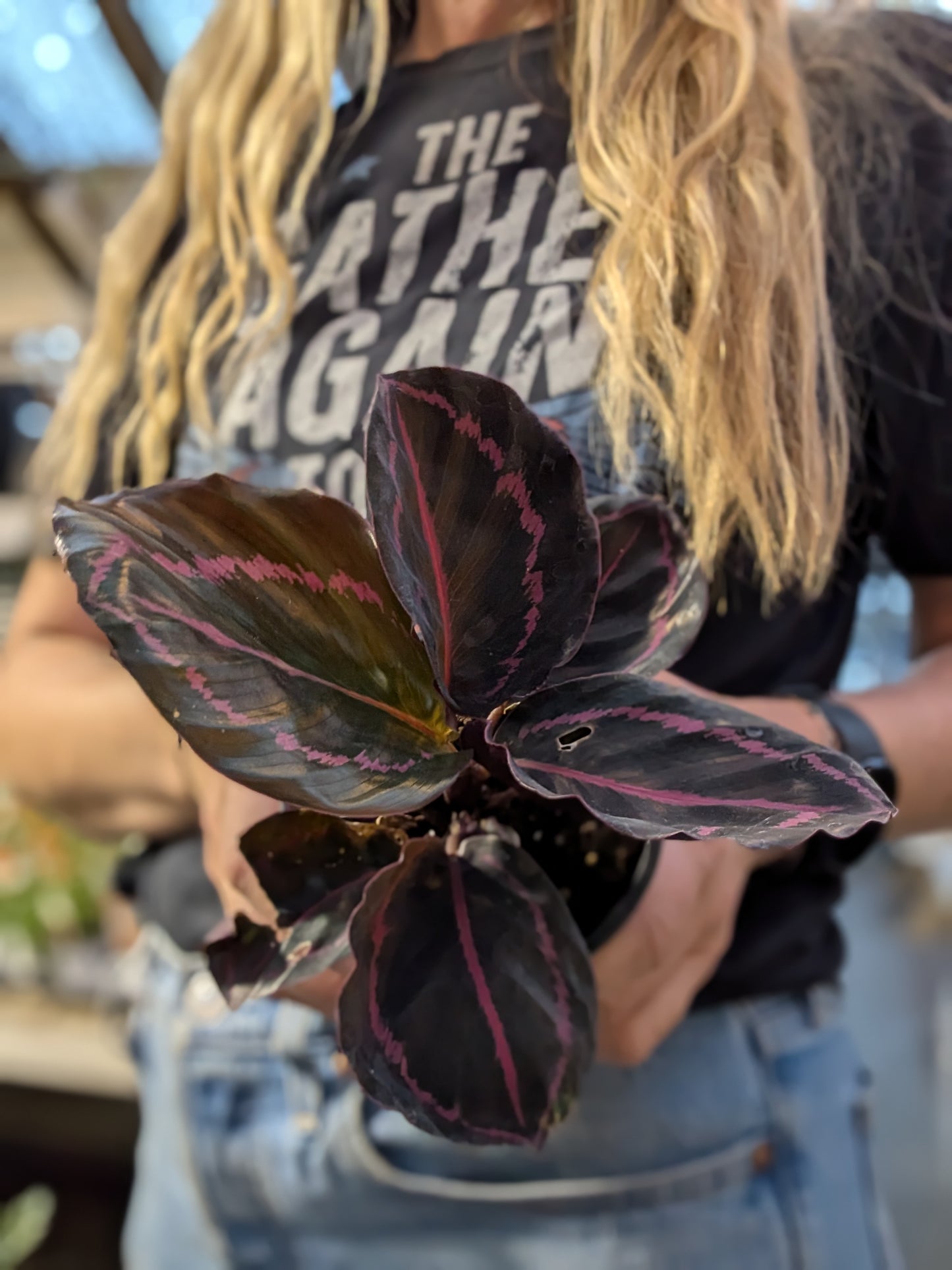
Calathea Roseopicta 'Dottie' (4")
Calathea Roseopicta 'Dottie' (4")
Couldn't load pickup availability
Calathea Roseopicta Dottie
Goeppertia roseopicta 'Dottie'
(Commonly still sold as Calathea roseopicta 'Dottie')*
Care Difficulty
Moderate. This striking tropical plant thrives with consistent moisture, warmth, and humidity.
Light Requirements
Bright, indirect light to medium light. Avoid direct sunlight, which can fade the rich foliage colours and scorch the leaves.
Water Requirements
Keep the soil evenly moist but not soggy. Water when the top inch of soil begins to dry. Calatheas are sensitive to minerals, so filtered, distilled, or rainwater is preferred whenever possible.
Humidity
Prefers high humidity (50 to 70%). Higher humidity helps prevent brown leaf edges and keeps the foliage looking its best.
Pet Safety
Pet safe. Non-toxic to cats and dogs.
Growth Speed
Moderate. Produces fresh leaves throughout the growing season under ideal conditions.
Expected Mature Size
- Height: 12 to 24 inches
- Width: 12 to 24 inches
Pot Size
Repot every 1 to 2 years using a well-draining indoor potting mix in a container with drainage holes.
Where it Grows Best
Indoors in temperatures between 65 and 80°F (18 to 27°C). It thrives in bright bathrooms, kitchens, bedrooms, or any room with consistent humidity and indirect light.
Perfect for…
- Pet-friendly homes
- Tropical plant collections
- Bathrooms
- Offices
- Modern home décor
- Anyone looking for dramatic foliage
Common Mistakes
- Allowing the soil to dry out completely.
- Overwatering or leaving the roots in soggy soil.
- Using hard tap water.
- Placing the plant in direct sunlight.
- Growing in dry air or near heating vents.
- Exposing it to cold drafts.
Frequently Asked Questions
What makes Calathea Dottie unique?
Calathea Dottie is prized for its nearly black, deep burgundy leaves highlighted with vibrant pink markings and purple undersides, creating one of the most dramatic foliage displays of any houseplant.
Why are the leaf edges turning brown?
Brown edges are usually caused by low humidity, inconsistent watering, or minerals in tap water. Increasing humidity and using filtered or distilled water often solves the problem.
Why are my leaves curling?
Leaf curling usually indicates the plant is too dry, too cold, or receiving too much direct sunlight. Check the soil moisture and move it to a warm location with bright, indirect light.
Does Calathea Dottie move its leaves?
Yes. Like other prayer plants, its leaves gently raise in the evening and lower again during the day in response to changing light levels.
How often should I fertilize it?
Feed once a month during spring and summer with a balanced water-soluble houseplant fertilizer at half strength. Do not fertilize during the winter months.
Should I mist my Calathea?
Occasional misting can help temporarily, but a humidifier or pebble tray provides more consistent humidity for long-term health.
Shipping Guarantee
Every Calathea Dottie is carefully inspected, watered, and securely packaged before shipping. Extra care is taken to protect its richly coloured foliage so your plant arrives healthy and ready to enjoy.
Healthy Arrival Guarantee
We stand behind the quality of our plants. If your Calathea Dottie arrives with significant shipping damage or in poor condition, contact us within 24 hours of delivery with clear photos of the plant and its packaging. We will gladly work with you to provide an appropriate replacement or store credit in accordance with our Healthy Arrival Guarantee policy.
Share