
Riverdene Garden Centre
Gold Bleeding Heart
Gold Bleeding Heart
Couldn't load pickup availability
Overview
-
Cultivar Name: Dicentra spectabilis ‘Gold Heart’.
-
Common Name: Gold Heart Bleeding Heart (also sometimes marketed as “Golden Bleeding Heart”).
-
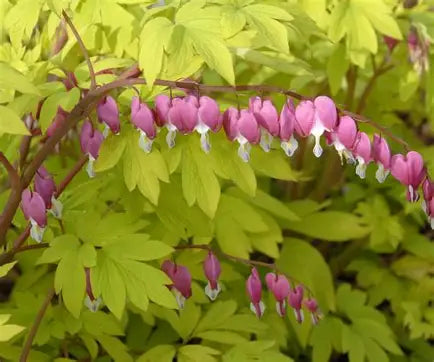
Key Features: Striking golden‑yellow foliage (much brighter than the typical green of bleeding hearts) and in late spring to early summer the arching stems carry pendant pink heart‑shaped flowers with white inner petals.
-
Size: Grows to about 18‑24 inches tall (≈45‑60 cm) and about 24‑36 inches wide (≈60‑90 cm) in typical garden conditions.
-
Hardiness: Rated down to USDA Zone 3 in many sources for this cultivar.
Light & Site Requirements
-
Light: Prefers part shade (morning sun + afternoon shade) or full shade. In cooler climates, it may tolerate a bit more sun, but avoid hot, direct afternoon sun especially on the foliage.
-
Soil: Rich, humus‑filled soil that is moist but well‑drained is ideal. Heavy clay or persistently water‑logged soils can cause crown or root rot.
-
Moisture: Prefers consistent moisture during its active season. However, avoid standing water or overly soggy conditions.
-
Placement Tip for Zone 3: Choose a sheltered location (protected from wind), with good drainage—avoid low spots where spring snowmelt or standing water could settle at the crown.
Planting & Maintenance
-
Planting Depth: Set the crown level with the surrounding soil—too deep can lead to rot.
-
Spacing: Allow roughly 24–36 inches (60‑90 cm) between plants to let the foliage mound spread and to ensure good air circulation.
-
Watering:
-
While establishing: keep soil moderately moist.
-
Once established: maintain soil moisture during spring; as temperature rises and if plant naturally declines, water moderately and rely on companion plants to fill in.
-
-
Fertilizing: A light top‑dressing of compost in spring is usually sufficient. The plant doesn’t demand heavy fertilizing; avoid excessive nitrogen which may encourage weak, floppy growth.
-
Deadheading & Dormancy: After flowering the foliage may yellow and the plant might go semi‑dormant in midsummer—this is normal. You can cut back the foliage when it yellows to promote tidiness and allow other plants to take over the space.
-
Division: Every 3–4 years or when the center becomes sparse; divide in early spring before new growth emerges.
Cold‑Climate / Zone 3 Considerations
-
This cultivar is hardier than many think—rated for Zone 3. That makes it a strong choice for northern landscapes when sited correctly.
-
Key considerations:
-
Ensure the site’s drainage is excellent—winter and spring runoff must not pool.
-
Shade or part shade is especially important in prairie/zone 3 settings, where summer sun and heat can stress the foliage.
-
After active growth ends and the foliage begins to yellow, you can allow it to retreat for the season and then replace or plant a companion that fills in during its dormant period.
-
A light layer of mulch after the ground freezes may help protect crowns, but avoid heavy mulch that holds moisture at the plant base.
-
Photo from Proven Winners
Share