

Riverdene Garden Centre
Lotus Moon Pearlbush
Lotus Moon Pearlbush
Couldn't load pickup availability
Lotus Moon™ Pearlbush — Care & Culture
Overview & Key Attributes
-
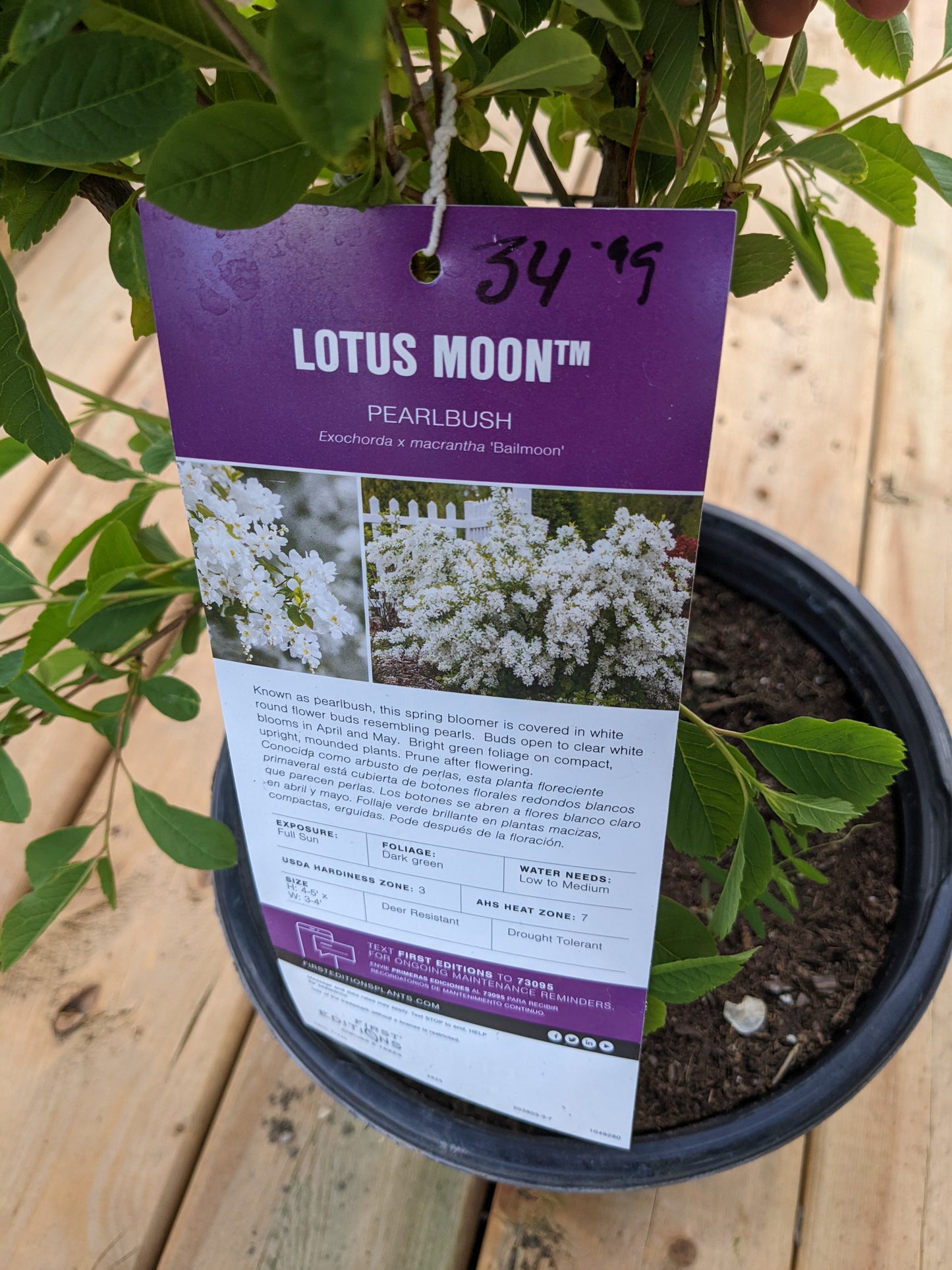
Botanical Name: Exochorda × macrantha ‘Bailmoon’ — marketed as Lotus Moon™ Pearlbush.
-
Hardiness Zones: Zones 3 to 7 (i.e. cold-tolerant to about –30 °C / –20 °F)
-
Mature Size: Typically 4–5 ft tall × 3–4 ft wide (some sources say up to ~5 ft square)
-
Habit / Form: Upright, mounded, somewhat compact shrub.
-
Flowers / Bloom Time:
• Before leaf-out in spring, produces white flowers that emerge from round, pearl-like buds (hence “pearlbush”)
• Blooms on last year’s growth (old wood), so pruning must be timed accordingly. -
Foliage: Bright to medium green during the growing season.
-
Other Traits:
• Deer resistance cited.
• Low maintenance in ideal conditions.
• Drought tolerant once established (with average water) but prefers consistent soil moisture during establishment.
Planting & Site Selection
-
Sun Exposure: Full sun to part sun. For best flowering, provide at least ~6 hours of direct sun.
-
Soil:
• Well-draining soil is critical. Avoid poorly drained or waterlogged soils.
• Slightly acidic to neutral preferred, but cultivar is tolerant of a range of soils if drainage is good. -
Planting Depth: Make sure the crown (stem base / root flare) is at or slightly above soil level. If planted too low, rot may occur; too high, it may dry out.
-
Spacing: Allow enough space for mature spread—3 to 4 ft apart is common.
-
Wind & Shelter: In cold or windy sites, shelter from harsh winter winds may reduce desiccation stress.
Watering & Mulching
-
Establishment Phase: Keep soil evenly moist (but not soggy) during the first 1–2 seasons to support root development.
-
After Establishment: More drought-tolerant, but best performance when soil moisture is maintained during extended dry periods.
-
Mulch: Apply a 2–3 in layer of organic mulch around the base (leaving a gap near the stem) to conserve moisture, moderate soil temperature, and suppress weeds.
Fertilizing
-
Apply a balanced, slow-release shrub or perennial fertilizer in early spring before new growth begins.
-
Do not over-fertilize with high nitrogen; that may push weak growth and reduce flowering potential.
Pruning & Maintenance
-
When to Prune: Immediately after flowering in spring (once blooms fade), because it blooms on old wood.
-
How to Prune:
• Remove dead, damaged, or weak wood.
• Thin interior branches to improve light and airflow.
• To rejuvenate, you can cut back up to one-third of older stems to the ground to encourage new growth. Exochorda types tolerate this.
• Avoid heavy pruning late in season (after new shoots form) — it may reduce blooms the next year.
Pests & Diseases
-
Exochorda / pearlbushes are generally fairly resistant to serious disease, but issues can arise, especially if conditions are unfavorable.
-
Common Issues:
• Branch dieback in overly wet or poorly drained soils
• Occasional fungal leaf spot in humid, damp conditions
• Monitor for general shrub pests (aphids, scale) -
Good cultural practices—proper soil, airflow, avoiding overhead watering—help reduce disease risk.
Winter & Cold Hardiness
-
Very cold-hardy (zone 3 class) — suitable even for harsh climate regions.
-
In exposed sites, new plantings may benefit from windbreak or partial wind protection to reduce winter desiccation.
-
A layer of mulch in late fall helps buffer root zone temperature fluctuations.
Landscape Uses & Pairing Suggestions
-
Specimen or Focal Shrub: The abundant white blooms make it an early focal point in spring gardens.
-
Mixed Borders / Shrub Beds: Planted with later bloomers to extend interest—after its spring show fades, companion shrubs or perennials can take center stage.
-
Accent in Smaller Gardens: Its modest mature size makes it suitable for compact landscapes.
-
Cut Branches: The long-stemmed, showy blooms are often good for cutting and using in arrangements.
-
Attracts Pollinators: Early flowers help nourish early butterflies and pollinators.
Photo from Jeffries Nurseries
Share