
Riverdene Garden Centre
SGT. Pepper Tatarian Dogwood (PW)
SGT. Pepper Tatarian Dogwood (PW)
Couldn't load pickup availability
Overview
Botanical name: Cornus alba ‘Verpaalen2’ (trade name Sgt. Pepper® Tatarian Dogwood)
Common name: Tatarian Dogwood ‘Sgt. Pepper’
Hardiness Zones: 3–7
Size: Typically ~4‑6 ft tall × ~6‑8 ft wide (≈1.2‑1.8 m × 1.8‑2.4 m)
Key features:
-
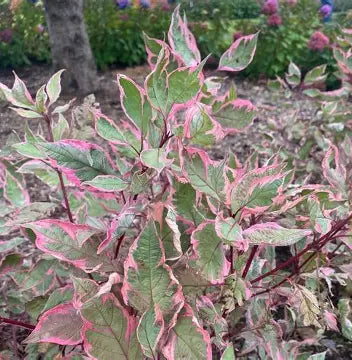
Variegated foliage (green & white with hints of pink) in spring & summer, turning bright pink/burgundy margins in fall.
-
Red stems in winter for added interest.
-
White flowers in spring (on old wood)
-
Good adaptability to different soils including moist sites.
Light & Site Requirements
-
Sun to part sun: Works in full sun or partial shade (minimum ~4 hours direct/bright light).
-
Soil: Prefers moist, well‑drained soil, though very adaptable. Tolerates wet spots (rain gardens, slopes) and also performs well in average soils.
-
Spacing: Given spread ~6‑8 ft wide, space accordingly (for example 5‑6 ft apart for hedge or mass planting).
Watering & Maintenance
-
Water thoroughly at planting and during the first season while root system establishes.
-
Once established — moderately tolerant of drought, though best colour and vigour if moisture is consistent.
-
Pruning: To maintain vivid stem colour and healthy habit: annually (late winter/early spring) remove ~1/3 of oldest stems to ground level to encourage new growth that has the best winter colouring.
Special Notes for Cold/Winter & Zone 3
-
Rated hardy to Zone 3, making it suitable for northern climates and prairie landscapes.
-
Because of its winter stem colour, it adds interest even in dormant season — good for winter landscapes.
-
In exposed or dry soil sites, mulch and ensure protection in first year to help establish.
-
Since stems coloured year to year show best on younger wood, the pruning strategy helps keep a fresh display of colour.
Pests, Diseases & Considerations
-
Generally robust and low‑maintenance.
-
Some typical dogwood issues (in poorly drained soils) such as root issues; good drainage is beneficial.
-
Because of colour change and vigorous nature, can spread via suckers (check spacing if using as hedge).
-
Good deer resistance noted (as many dogwoods are less browsed) though always check local browsing pressure.
Uses & Landscape Applications
-
Excellent as a specimen shrub or focal feature in a garden bed.
-
Works well in hedge or screen where width allows; especially good for winter interest low hedge.
-
Effective in rain gardens or moist spots because of tolerance to wetter soils.
-
Useful in mass plantings for colour impact (foliage variegation + red winter stems).
-
Suitable for foundation plantings, mixed shrub borders, contrast plantings (especially with evergreen backdrops or perennials).
Photo from Proven Winners
Share