

Riverdene Garden Centre
Snowball Viburnum
Snowball Viburnum
Couldn't load pickup availability
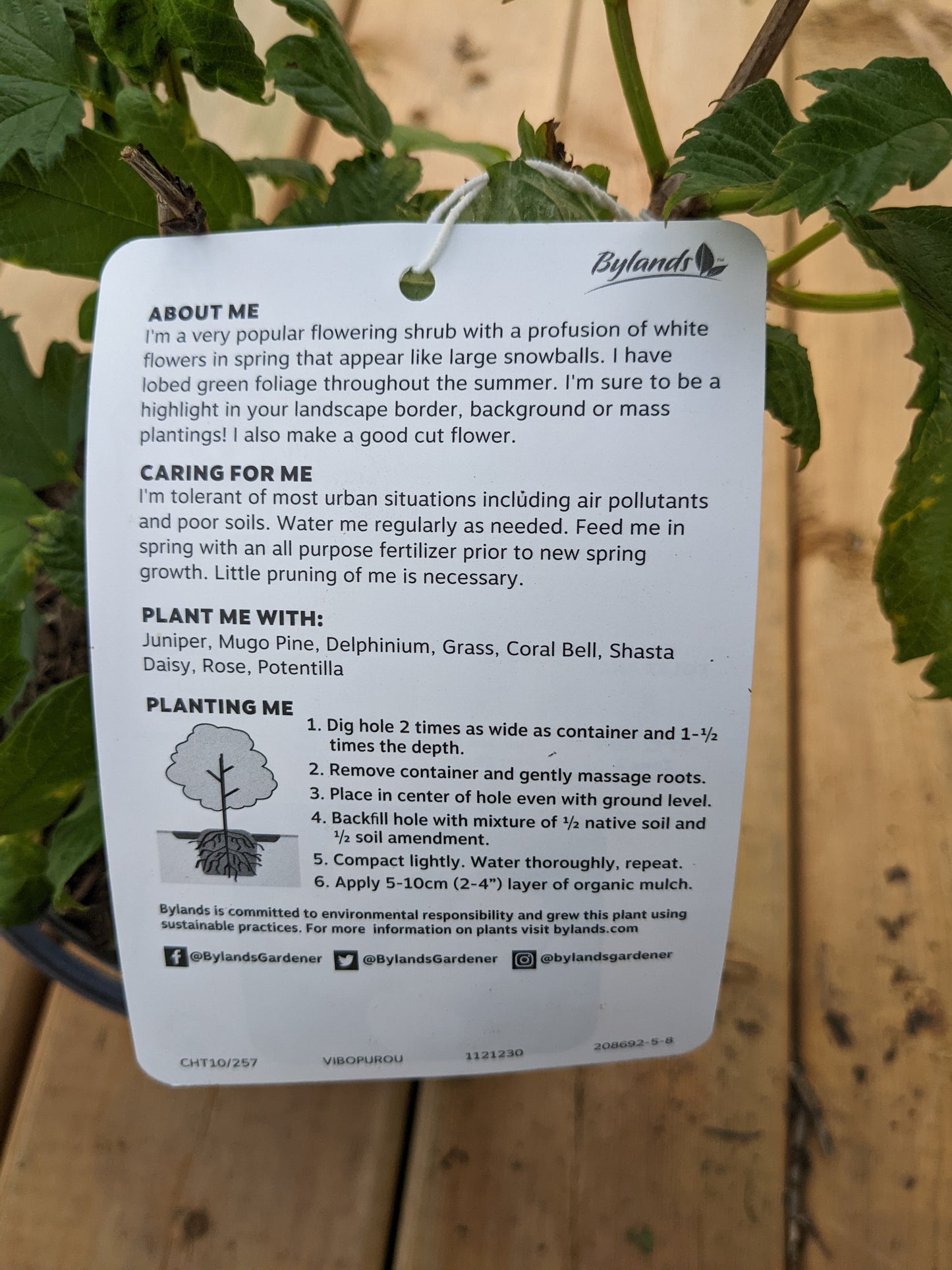
Snowball Viburnum Care Guide
Note: “Snowball viburnum” may refer to several Viburnum cultivars that produce large, round clusters of white flowers in spring. Always check which species/cultivar you have (European snowball V. opulus “Roseum,” Chinese snowball V. macrocephalum, or others) for specific tolerances.
1. Planting & Site Requirements
-
Light: Full sun to part shade. For best flowering, what counts is at least 6 hours of direct sunlight per day.
-
Soil: Preferably moist, humus-rich, well-drained soil. Slightly acidic to neutral pH is ideal.
-
Watering (Establishment): Water deeply and regularly to keep soil evenly moist while the plant is getting established.
-
Watering (Once Mature): More tolerant of dry spells, but still benefits from supplemental watering during drought periods.
-
Mulching: Use a layer of organic mulch around the base (leaving some gap from the trunk) to conserve moisture and moderate soil temperature.
-
Spacing: Allow room for mature spread, and ensure good air circulation around the shrub to reduce disease pressure.
2. Flowering, Foliage & Seasonal Interest
-
Bloom Time: Spring, usually before or just as leaves emerge.
-
Flowers: Large, round clusters of white blooms (often starting from pale green buds).
-
Foliage: Green leaves in summer; fall color can vary, sometimes taking on reddish or bronze tones.
-
Fruit: Many snowball types have sterile or very minimal fruiting (so they don’t drop messy berries) depending on cultivar.
3. Pruning & Maintenance
-
When to Prune: Immediately after flowering (late spring) is the time to trim. Because most snowball viburnums bloom on old wood, pruning too late or too early may remove next year’s flower buds.
-
How to Prune:
• Remove dead, damaged, or crossing branches.
• Thin older stems to encourage new growth.
• If rejuvenation is needed, you can cut a portion of older stems back to the base (not all at once). Many guides recommend removing up to one-third of the shrub in a given year. -
Avoid: Pruning in fall or late winter when you risk cutting off the wood that would carry spring blooms.
4. Fertilizing
-
Apply a balanced, slow-release fertilizer in early spring to support growth and flowering.
-
Avoid over-fertilization with heavy nitrogen, as that may favor foliage growth at the expense of flowering.
5. Pests & Diseases
-
Common Issues:
• Aphids, leaf spots, powdery mildew.
• Crown or stem borers (in some regions) may threaten wood near the base. -
Prevention & Management:
• Water at the ground level (avoid overhead watering) to reduce foliage wetness.
• Provide good air circulation by not crowding shrubs and by thinning interior growth.
• Remove and destroy infected wood; sanitize tools between cuts.
6. Winter & Cold Hardiness
-
Many snowball viburnum cultivars are fairly hardy (though the exact hardiness depends on species/cultivar).
-
In colder regions, apply mulch over the root zone in late fall to buffer freeze-thaw cycles.
-
Young plants or those in exposed sites may benefit from some wind protection early on.
7. Landscape Uses
Excellent as a specimen or focal shrub, especially for spring display.
Useful in mixed shrub borders to provide contrast when in bloom.
Because many snowball viburnums have minimal fruiting, they are less messy than other viburnums—good near patios or walkways.
Can be used in hedges or screens, especially where spring interest is desired.
Photos from the Spruce
Share