
Bylands
Winecraft Black Smoke Bush (Proven Winners)
Winecraft Black Smoke Bush (Proven Winners)
Couldn't load pickup availability
Cotinus coggygria ‘Winecraft Black’
(Winecraft Black® Smokebush)
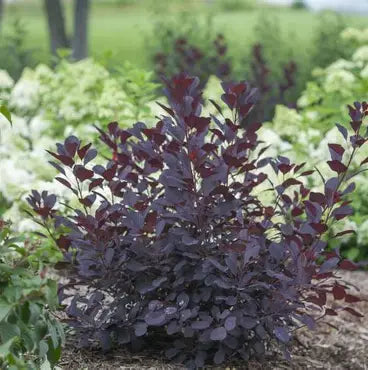
Winecraft Black® Smokebush is a compact, cold-hardy shrub known for its rich, dark foliage and dramatic summer “smoke” plumes. Emerging a vibrant reddish-purple in spring, the leaves deepen to near-black through summer before turning brilliant oranges and reds in fall. Smaller and tidier than older varieties, it’s ideal for prairie gardens, adding year-round texture and color to mixed borders, foundation plantings, or modern landscape designs.
Planting & Location
Hardiness Zone: 3–8 (extremely hardy and well-suited to prairie climates)
Mature Size: 4–6 ft tall × 4–6 ft wide
Growth Rate: Moderate (12–18 inches per year)
Sunlight Needs: Full sun (6+ hours of direct light for best color)
Soil Preference:
-
Prefers well-drained loam or sandy soil
-
Tolerates average, slightly alkaline prairie soils
-
Avoid consistently wet or compacted sites
Spacing: 4–6 ft apart for individual shrubs or small groupings
Watering
Young Plants (First Year):
Water deeply 2–3 times weekly until established.
Established Shrubs:
Very drought-tolerant once rooted in. Water during extended dry spells to maintain vibrant foliage color.
Avoid Overwatering:
Smokebush prefers drier conditions and does not tolerate standing water.
Fertilizing
First Year:
No fertilizer necessary while roots establish.
Mature Shrubs:
Apply a slow-release balanced fertilizer (10-10-10) or a top dressing of compost in early spring.
Avoid high-nitrogen fertilizers—they may reduce color intensity and create lanky growth.
Pruning & Maintenance
Best Time to Prune:
Late winter to early spring before new growth emerges.
How to Prune:
-
Blooms and “smoke” plumes appear on new wood.
-
Remove dead or crossing branches annually to maintain shape.
-
For a more compact, bushy form, lightly trim each spring.
-
For large leaves and fewer flowers, cut back harder every few years to rejuvenate.
Flowers, Foliage & Seasonal Interest
Bloom Time: Early to mid-summer (June–July)
Flower Color: Airy pinkish-purple plumes that create a smoky haze effect over the foliage
Fragrance: Light, airy, pleasant scent
Foliage:
-
Spring: Deep wine-red emerging leaves
-
Summer: Nearly black, velvety foliage with exceptional depth of color
-
Fall: Brilliant orange, red, and purple tones
Seasonal Interest: Four-season appeal—showy flowers, striking foliage, and dramatic fall color
Pest & Disease Management
Resistant to: Drought, deer, and most insect pests
Common Pests:
-
Aphids: May appear on new shoots. Solution: Rinse with water or use insecticidal soap.
-
Leaf Miners: Rare but possible; prune affected leaves.
Common Diseases:
-
Leaf Spot: May occur in overly wet conditions. Solution: Ensure good airflow and avoid overhead watering.
-
Verticillium Wilt: Rare; prevent by avoiding poorly drained soils.
Winter Protection
-
Hardy in Zone 3 with minimal protection.
-
Apply 2–3 inches of mulch around the base (avoid covering stems).
-
In very exposed sites, wrap young shrubs with breathable burlap the first winter to prevent desiccation.
-
Do not prune in fall—leave branches intact to catch snow for insulation.
Landscape Uses
-
Perfect for adding contrast in mixed borders or as a focal point
-
Excellent for compact landscapes, cottage gardens, and modern designs
-
Pairs beautifully with chartreuse, silver, or lime-green foliage plants
-
Drought- and heat-tolerant once established
-
Great companion to hydrangeas, ninebark, or ornamental grasses
Additional Notes
-
Winecraft Black® is an improved Proven Winners® selection bred for stronger stems, smaller size, and denser branching.
-
Provides consistent color without the legginess of traditional varieties.
-
Lifespan: 20+ years with proper care.
-
Can be trained into a small ornamental tree form if desired.
Photos courtesy of Proven Winners®
Share